


BY NIDHA KHAN
Whether you admit it or not, there isn’t a person who hasn’t been guilty of picturing themselves as the lead character of a movie or novel. Hello, Katniss Everdeen?
Besides the entertainment factor, we gravitate to these stories because of the fantasy, of being able to live a different life, even if it’s only for an hour or two. But, what’s often missing from these stories, is that Kiwi charm that only homegrown authors can deliver.
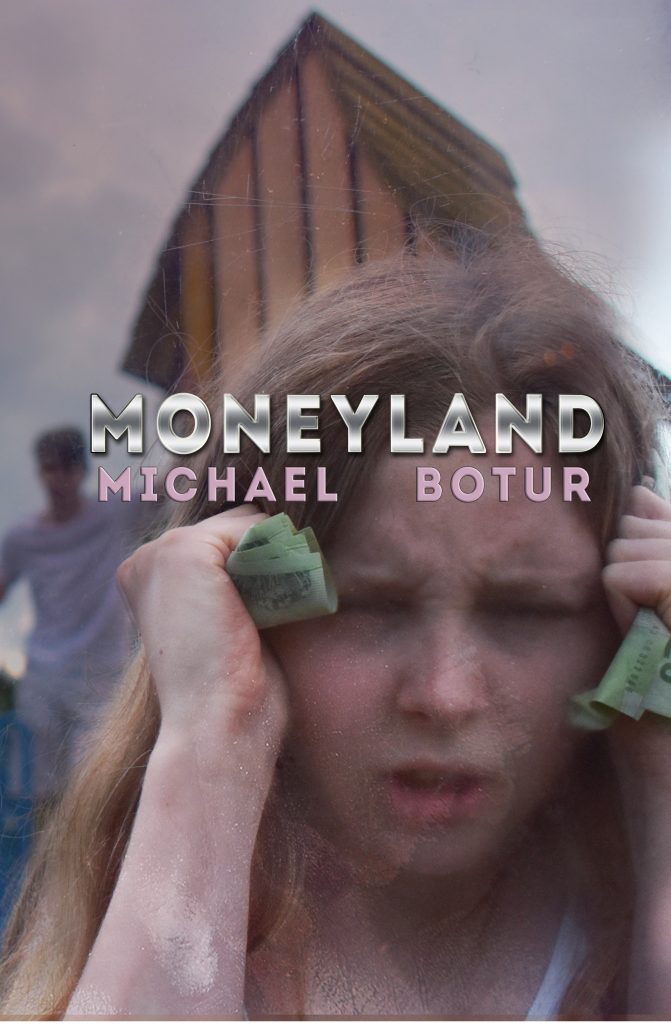
So for this feature, we chatted to Kiwi author Michael Botur about his young adult sci-fi novel Moneyland.
Can you tell us a bit about yourself?
I hail from Christchurch and I’m very lucky to have grown up in one location with one large pool of friends. A lot of my fiction writing explores mysteries within suburbia. Coming from a flat, safe hood with lots of cool places to play has been extremely influential on me. I got itchy feet when I was about 19, though, and lived in all the main four centres before settling down with my family in Whangarei, where I work as a writer.
Is this your first novel?
‘Moneyland’ is the first novel I believed in enough to promote. I wrote three novels before this one. The first novel was crap but the next two were pretty good and I’ll give them some more attention in the near future. Before ‘Moneyland’ was fully ready to publish, I raised heaps of publicity for it through a crowdfunding campaign. That’s because life is short and although some things like publicity and attention are scary, it’s really important as an entertainer to take some risks in your mission to entertain people.
If you could describe the novel that you’re promoting right now in 5 words, what would those words be?
Moneyland: Kiwi Hunger Games. Lol.
Why did you want to write this novel?
Moneyland is about a group of high school mates who get lured into a biodome experiment with an up-front prize of one million bucks cash each. The experiment is run by an artificial intelligence which wants to see if it can get rid of humans through hyperinflation, ie. By pumping so much money into the world that people forget the value of clean water, animals and crops. It’s all about something called Food scarcity, which is the topic of how close people are to the food they rely on to live (for many people in the world, if trucks stopped bringing fresh food to our supermarkets every day, there would be chaos within a month).
Growing up in suburbia, everything was provided for me. I didn’t have to work or hunt or raise crops or find clean drinking water or shelter to survive. But there are still people on this earth who have to sweat every day for their food, water and shelter. So a big theme in the novel is reminding the reader that there has been heaps of work put into preparing the food that’s so easy for us to eat, and we should take nothing for granted, because if each of us had to find nutrition in our own backyard, we would find it extremely hard.
Also I’m a big heavy guy and I enjoyed making my characters eat bugs and guinea pigs and sparrows. Honestly, around the world, you name it, there is a culture somewhere that eats it. Cows, cats, guineas, dogs, chinchillas, chickens… and let’s not forget insects. Everything is food to someone somewhere.
Is there anything in particular you want the reader to take a way or think about from reading your novel?
You don’t have to feel that you’re not Bear Grylls, eating wild animals every day. But it is incredibly important to know how to sustain yourself. If you have never grown fruit or vegetables or never caught and eaten a wild animal, it’s important to do so, because you wouldn’t be here without your ancestors having grown and eaten everything they could. Remember to treat food sustainably, though, and value all your tools and everything you take from nature.
What was it like to write a novel for young people? How different do you think it is in comparison to writing a novel for older people?
Writing with a youngish audience in mind was very different from the stuff I usually publish, which is a genre called literary fiction. Writing Moneyland was all about being very direct with my narrative and plot. Not a single sentence is wasted on arty description. It’s all about how the main character Eden learns to shed her old irresponsible self and learn to be a woman in a harsh new environment.
What would you like to see more or less of in novels for young people?
It seems to me most NZ young adult writing is dominated by old, grey-haired people who do not keep up with what it’s like to be young in the 21st century. Credit to a lot of these authors for having been important in the past, but I think it’s unfair for older authors to take the spots that younger authors should have. There are people in our high schools and universities who could, and should, be getting the privilege of publishing books BY young people, FOR young people. I’m 33 and I’m sure there are plenty of people in their 20s who deserve to be read.
What are your plans for this year?
If somebody pays me to take a month off my day job, I’ll write the sequel to Moneyland. I have the plot, I have the plan, just need the money to pay for four weeks of solid writing!
Any questions, find me on Wattpad or Twitter – @michaelbotur
Plus I have an author page on Facebook, and a website – www.NZshortstories.com .
NIDHA KHAN is a public health graduate who spends her time writing about human rights, youth activism, and social issues. She’s also a lover of puns, a terrible cook, and is on a mission to hug every pug in sight. You can keep up with her antics on Instagram (@nidha01). You can check out more of her work here:
The Importance of Respect in Sexual Experiences
Directing Change: An Interview with Sharmeen Obaid-Chinoy


SHARE THIS POST...


