

By WILLIAM TONGUE.
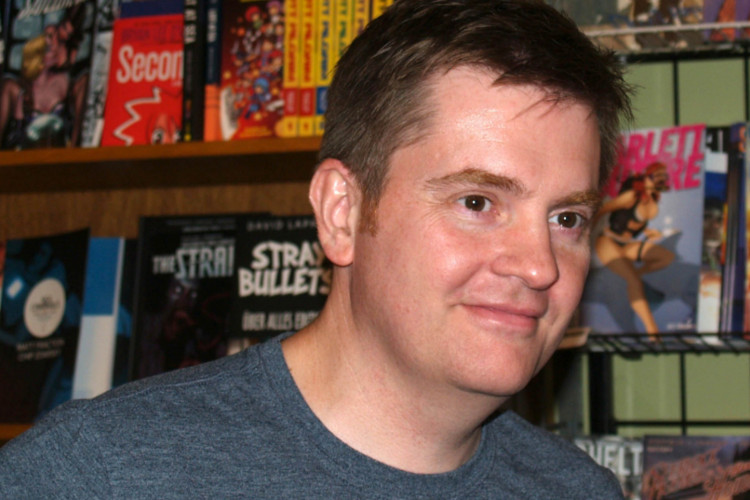
During Manukau’s Armageddon Expo, I had the pleasure of interviewing American lawyer/comic creator Charles Soule. His catalogue of work includes Death of Wolverine, All-New Daredevil, SheHulk and Marvel Comics’ upcoming Poe Dameron miniseries, with superstar artist Phil Noto. Poe Dameron features the titular starfighter pilot from Star Wars: The Force Awakens.
How long have you been in New Zealand and what do you think of it?
[Since] yesterday morning, I think I landed at 5am, and then after 24 hours of travelling from New York I arrived at the hotel. Tried to rest for a while but I couldn’t sleep! So I walked around Auckland a bit. It’s a nice city, I like it. [In America], some places are pretty compact. I mean, New York City, where I live, it’s very dense, because most of it’s just on the island of Manhattan—it just goes really high up.
You used to practice law but you’ve since made a career out of comics. Did you always have an interest in comics or was it something you acquired recently?
I still do practice as a lawyer! I was doing some this morning. But I was always into comics, since I was a little kid. The idea of doing it as a career, as something that might replace law, came much later. I still practice [law] because it’s my own firm, it’s my own practice that I started and I love it. I get to help people with the work I do. So I had assumed that the minute that things started to become successful in comics I would move away from law right away, but it hasn’t really happened. Until I drop dead from exhaustion and too much work, I will probably keep doing both for a while.
Creatively, do you like where you are now?
I do… Phil Noto is amazing. Speaking of, part of it is that the people I get to work with are unbelievably, unbelievably good! They’re better than I am, for sure. Every guy is better than the last one. It’s a real thrill, and I feel like I’m doing work that I’m very proud of. But there’s always room to grow, too, so the next one will be that much better.
One of your more recent works was a stint for Marvel’s She-Hulk. Even before you came to the title, she was a lawyer, is that right?
Yeah, yeah! That’s been a big part of her character since the very beginning, and different writers have decided to focus on that more or less. John Byrne didn’t really do a lot with it, but Dan Slott did a ton with it—and that was kind of my inspiration. The first place I ever encountered the character was Slott’s run. I decided to go even farther than that and make She-Hulk almost … sort of a strange, green, female reflection of my own work. Because she started her own small practice in Brooklyn and started doing work for the superhero community. I started my own small practice years and years ago—also in Brooklyn. The building where She-Hulk has her office in [his run of] the series is where my office is, it’s the same address and everything.
Do you want to change the industry and peoples’ perception of comics as a medium, or do you just want to write good stories?
I don’t think you can set out to be amazing, you just have to work really hard and if you’re lucky, people will think you’re amazing. You don’t get to decide, other people do.… Any of these characters that I’m lucky enough to get to write, who have these legendary characters with incredible [creative] teams, I think it’s important to find your own version of it.
Do you lean towards more detail-specific scripts in your relationship with artists, or do you like letting them make their own creative decisions?
I’ve certainly come to trust and believe in the skill of my artists… in a general script, if there’s a new location, like a temple or whatever, I will spend some time really digging into what that should feel like. ‘It’s gonna be like this temple from this movie, and it has these things on the walls, and it’s used for this, this is why it’s like this’. But to say ‘this room is six metres on the side, and it’s four feet wide’, like that stuff is ridiculous. The point of letting these guys do their job is because they have a better visual sense than I do. I really like to get out of the artist’s way as much as I can. But the emotion of a scene is something I spend a lot of time on, making sure the artist understands why things are happening this way.
Can you talk a little about how you’re approaching Poe Dameron’s character in the upcoming Star Wars miniseries?
Poe is in some ways easy and in some ways incredibly difficult, because [Poe’s actor] Oscar Isaac gave us such a sharply-drawn guy. Like, you know what Poe’s like, how charming he is… the skill he has as a pilot is there in the movie. But now it’s challenging, because now I have to write that guy, and make it feel like him. Writing charisma can be difficult; it’s sort of this weird, intangible thing. So … I feel like I have done my best. I was going over the whole [first issue] this morning and Phil Noto’s certainly drawn the absolute hell out of it, it looks amazing, all the stuff looks just like the movie. I’m very excited about it and can’t wait for people to see it and yell at me on the internet about it.
Finally, do you have any advice for aspiring creators who want to tell their own stories?
I think it’s something you have to be very patient about. Your craft is incredibly important, so you have to be as good as what you see on the shelves. You don’t have to be there today or tomorrow, but you have to know that if you wanna get anywhere you gotta be as good as the people you’re really loving. If you’re not, then you won’t be—nobody does anyone any favours in the creative industry. But talent does get recognised. So work on your skills and then really understand what makes the business work.
Charles Soule and Phil Noto’s Star Wars: Poe Dameron #1 drops from Marvel Comics on April 6. You can find Charles on Twitter @CharlesSoule and at his website charlessoule.wordpress.com.
FOLLOW US...


SHARE THIS POST...


